
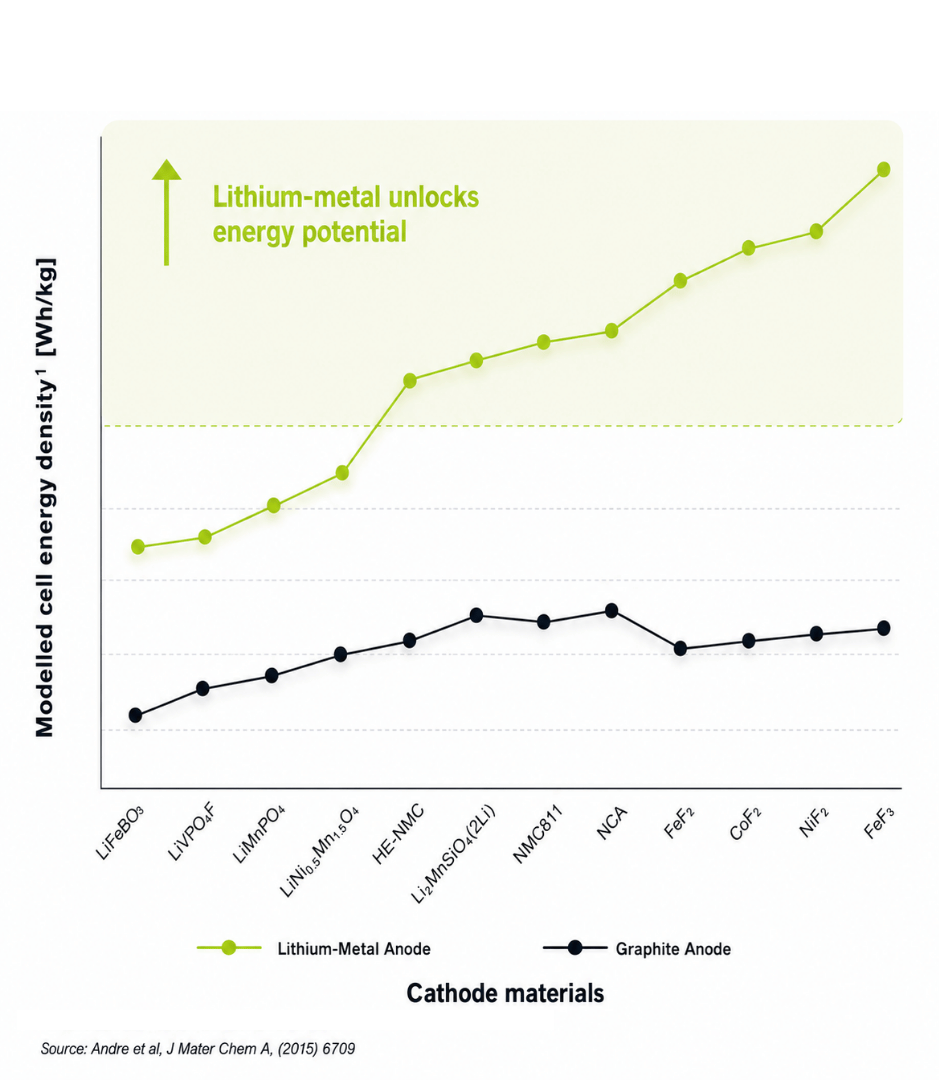
Graphite Has
Reached Its Limit
Graphite is a mature material. Every cell manufacturer running graphite competes on the same performance plateau. The alternatives — silicon, conventional lithium-metal — promise step-change performance but bring severe supply chain risks and engineering problems: swelling, dendrites, short cycle life, and manufacturing processes that don’t integrate into existing lines.
The result: stuck between a performance ceiling and a switching cost too high to justify.
Metal anodes store up to ten times more energy than carbon. LionVolt’s 3D anode architecture is designed to make metal anodes practical.
Lionvolt’s 3D Metal Anode Was Designed To Break That Challenge.
A Fundamentally Different Architecture.
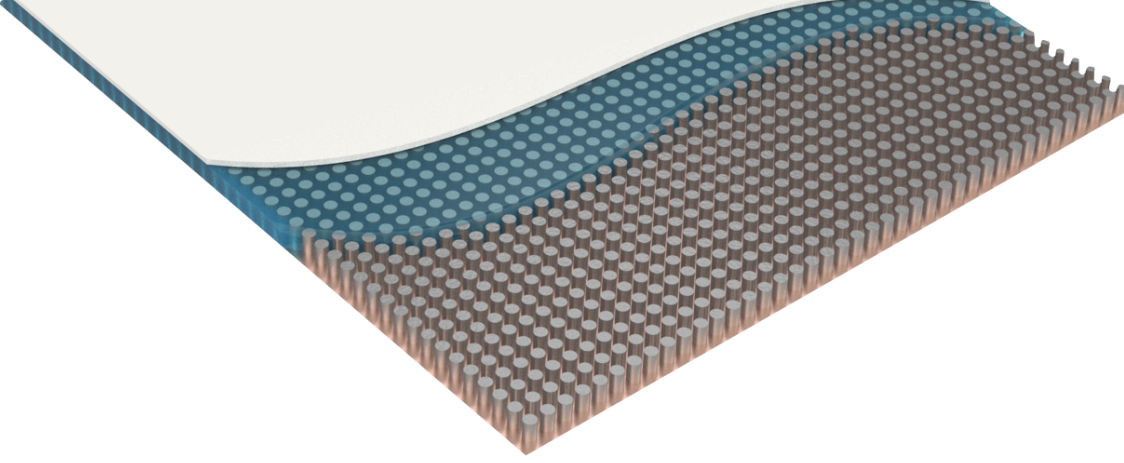
The 3D Metal Anode Structure
Standard lithium-metal anodes are flat. A flat anode limits the surface area available for lithium deposition which limits energy density, restricts charge and discharge rates, and concentrates mechanical stress during cycling, contributing to dendrite formation and short cycle life.
LionVolt’s 3D anode creates a three-dimensional scaffold for lithium deposition. The structure significantly increases the effective surface area within the same cell footprint, distributing lithium deposition across a high-surface-area architecture rather than concentrating it on a flat plane.
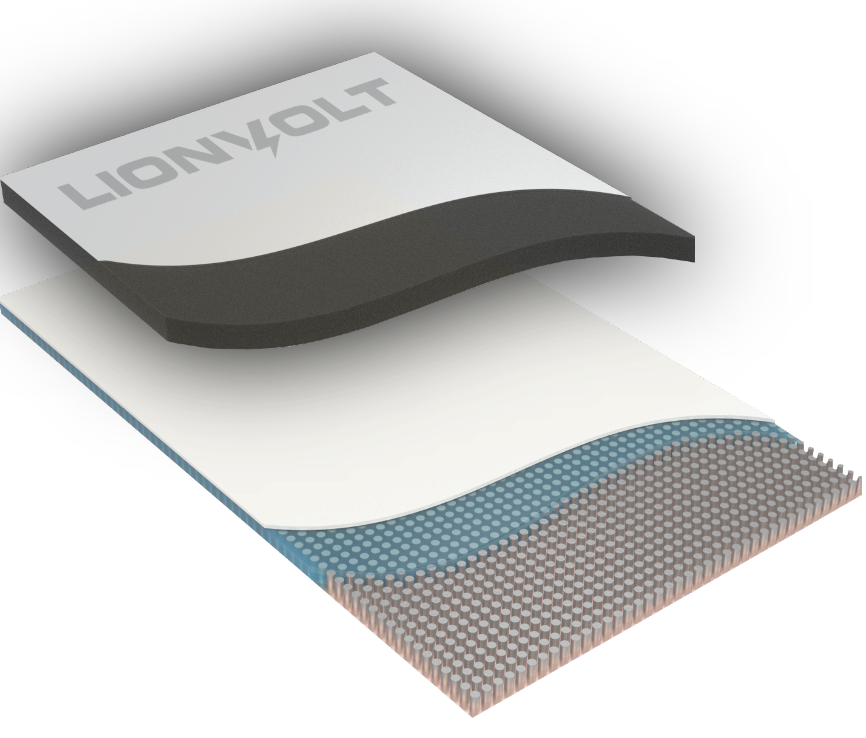
Metal Collector Foil
Cathode
Separator / Solid Electrolyte
Hybrid / Liquid Electrolyte
3D Lithium - Metal
3D Current Collector
The Architecture Performance Mechanism
Performance
What It Means
50 to 100% More Energy Density
More energy stored in the same cell volume. Direct uplift over conventional graphite-based cells.
Competitive cycle life
Suited to drone, UAV, and aviation duty cycles. Cycle life continues to improve as the platform matures.
Up To 10C Charge / Discharge
High power capability for takeoff loads, fast turnaround, and demanding operational profiles.
No First-Cycle Capacity Loss
Rated capacity is the delivered capacity from cycle one.

A Drop-in anode
Your Fab. Your Supply Chain. A Better Anode.
Most next-generation anode materials require new equipment and new handling protocols. LionVolt’s 3D anode is built around the opposite principle: the manufacturing processes stay with LionVolt.
The 3D anode is produced at LionVolt’s pilot line in reel-to-reel format; the same format used for every electrode in conventional cell manufacturing. Rolls go into LionVolt’s own cells for internal testing and validation. As production scales, the same rolls ship directly to cell manufacturing sites for integration into production lines. No new capital investment. No process requalification at the fab.
3D Metal Anode
One Architecture. Many Cell Chemistries.
The 3D anode architecture is designed to be applied across next-generation platforms.
Lithium-Ion
Current primary application. Pilot line in final commissioning stage.
Solid-State
The 3D architecture is compatible with solid-state electrolyte formats.
Sodium-Ion
The 3D electrode structure is applicable to sodium-ion chemistries.
Customers who qualify the 3D anode benefit from ongoing performance improvements, without changing their manufacturing process or switching suppliers.
Our locations
Proudly Developed And Manufactured In Europe.

HQ & Innovation Centre
Eindhoven Netherlands
Developed at the High Tech Campus Eindhoven, drawing on decades of thin-film
expertise from the European semiconductor and photonics industries.

3D Anode Pilot Line
BIC Eindhoven Netherlands
LionVolt’s pilot line at the Brainport Industries Campus is in the final stages of commissioning. It will produce 3D anode rolls for our prototype and ‘A’ cells, which are manufactured and validated at our cell manufacturing plant in Thurso. As production scales, the same reel-to-reel format runs at gigascale on standard industry equipment, rolls shipped directly to cell manufacturing sites.

Cell Manufacturing
Thurso Scotland
LionVolt cells are manufactured at our facility in Thurso, Caithness. Purpose-built cell manufacturing with MWh-scale capacity, acquired in 2024. This is where 3D anode rolls are integrated into finished cells for customer supply.